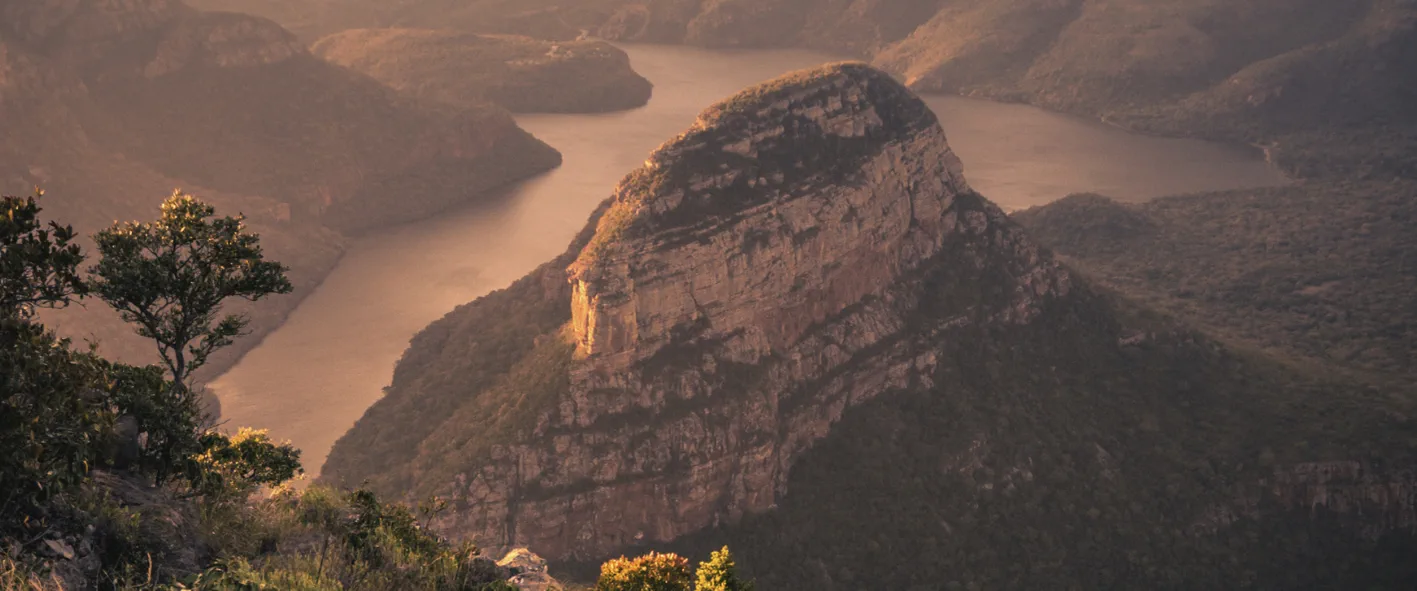
The Namib is 55 million years old, older than the continent's current coastline, and it shows. From the iron-red dunes of Sossusvlei to the black lava plains of Damaraland where desert-adapted elephants range a hundred kilometres for water, Namibia offers a landscape that simply has no equivalent.
Design your Namibia journey →Namibia is the world's second least densely populated country, and you feel it in its depths, hours of driving across gravel plains and black basalt lava fields where the horizon is absolute and the only sound is wind. The dunes of the Namib Desert around Sossusvlei are Africa's most photographed, and yet they still surprise in person: the scale is geological, the colours shift from pale gold at dawn to deep amber at noon to burgundy red at sunset, and the dead acacias of Deadvlei, preserved for 900 years in an environment too arid to let them rot, stand in the white clay pan like a piece of Japanese calligraphy.
In Damaraland, a population of desert-adapted elephants has evolved over generations to cover vast distances on less water than any other studied elephant population, their feet slightly broader than those of savanna elephants, their bodies leaner, their knowledge of underground water sources carried in generational memory.
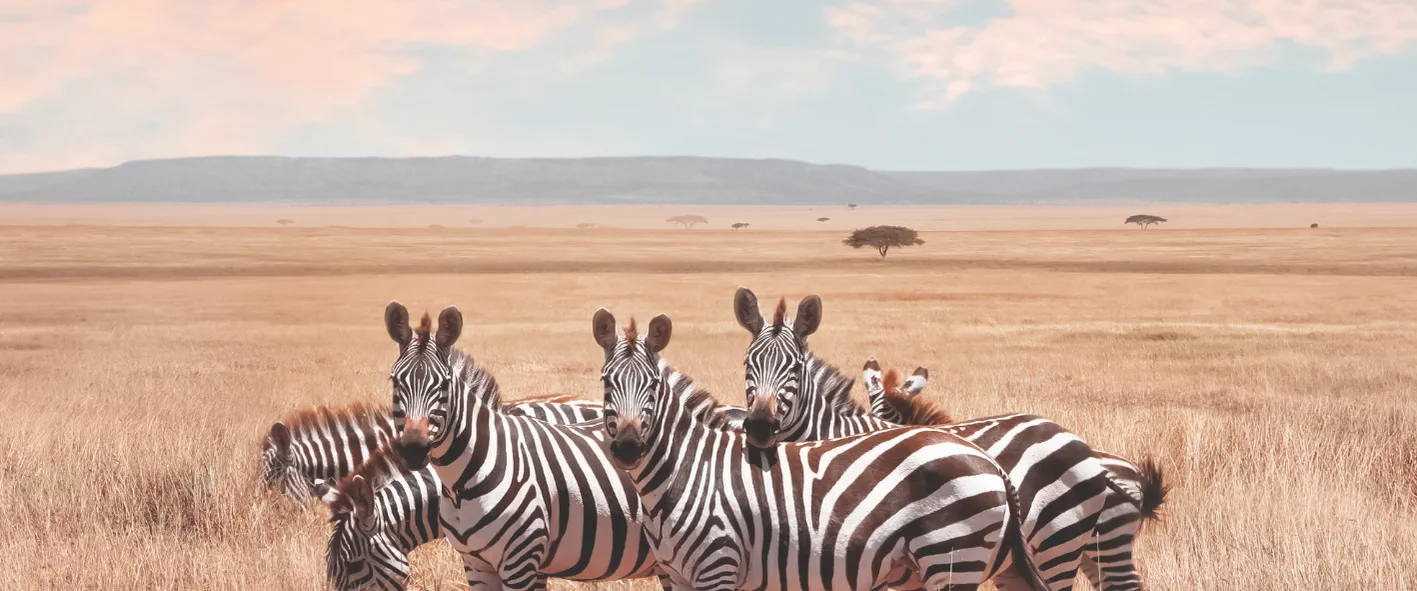
The Etosha salt pan, 120 kilometres long, blindingly white, turns the surrounding savanna into a concentrated theatre of wildlife in the dry season, as every large mammal in the north converges on the waterholes ringing its edge.
Sossusvlei's gates open at sunrise, and the first forty minutes are of an entirely different character from everything that follows once the tour vehicles arrive. We stay at private lodges inside the park, Wolwedans or similar, so you're already in the dune field as the light begins. Climbing Dune 45 or Big Daddy takes twenty minutes of effort in shifting sand; from the crest, the view takes in 300 kilometres of Namib Naukluft Park. The descent to Deadvlei, the white clay pan where 900-year-old dead trees stand like silhouettes, should be done slowly, with a guide who can explain the pan's formation and the precise conditions that preserve these trees indefinitely in the hyper-arid air.
The Save the Elephants research team operating in Damaraland uses satellite collars and generational memory maps to understand how these animals navigate the desert. Joining a day of tracking, on foot, in a small group, with a conservancy guide who has known these animals since childhood, is a fundamentally different encounter from a vehicle safari. You read tracks in dry riverbeds, follow trails across lava flats, and ultimately end up downwind of a family group drinking from a seep in a dry riverbed. The camp at the Palmwag Concession places you inside a 4,500 km² private reserve with no tourist infrastructure beyond your own lodge.
Most African national parks close their gates at sunset. Etosha is different: the Halali and Okaukuejo waterholes are lit all night, and the procession of animals coming to drink is one of the continent's most hypnotic wildlife experiences. Black rhino, rarely seen on day drives, typically appear between 10pm and 2am. Lions settle around the waterhole's edge for hours. We book lodges inside the park gates so you can walk alone to the waterhole hide at 1am, watch in silence for an hour, and return to bed. The dry-season concentration from May to October is peak time.
This itinerary moves from Windhoek south into Namib dune country, then north through Damaraland's elephant desert to the waterhole theatre of Etosha. Best May to October, when the rains are absent, temperatures are mild and wildlife is concentrated at the northern waterholes.
Namibia's small, orderly capital makes a valuable orientation point. The Katutura township visit, led by local guides drawn from the community itself, introduces post-independence Namibian identity and the country's singular political stability. The National Museum of Namibia on Robert Mugabe Avenue is compact and excellent on pre-colonial San and Himba cultures.
A drive to a private lodge inside Namib Naukluft Park. Three days in dune country: dawn on the dunes, rest at midday (the heat is absolute), afternoons at Sesriem Canyon where the Tsauchab River has carved a winding canyon into dolomite, and evenings under some of the darkest skies in the southern hemisphere. A resident guide introduces the Namib's specialist wildlife: fog-basking beetles that harvest moisture from sea mist on their backs, the sidewinding adder and the web-footed gecko.
A drive north through the Namib into Damaraland's volcanic landscape. The UNESCO site of Twyfelfontein holds over 2,500 San rock engravings on a sloping sandstone outcrop, some dating back 6,000 years. The elephant tracking day follows, with a conservancy guide leading a morning on foot through dry riverbeds where family groups were spotted the day before. A night under skies with no competing light for a hundred kilometres around.
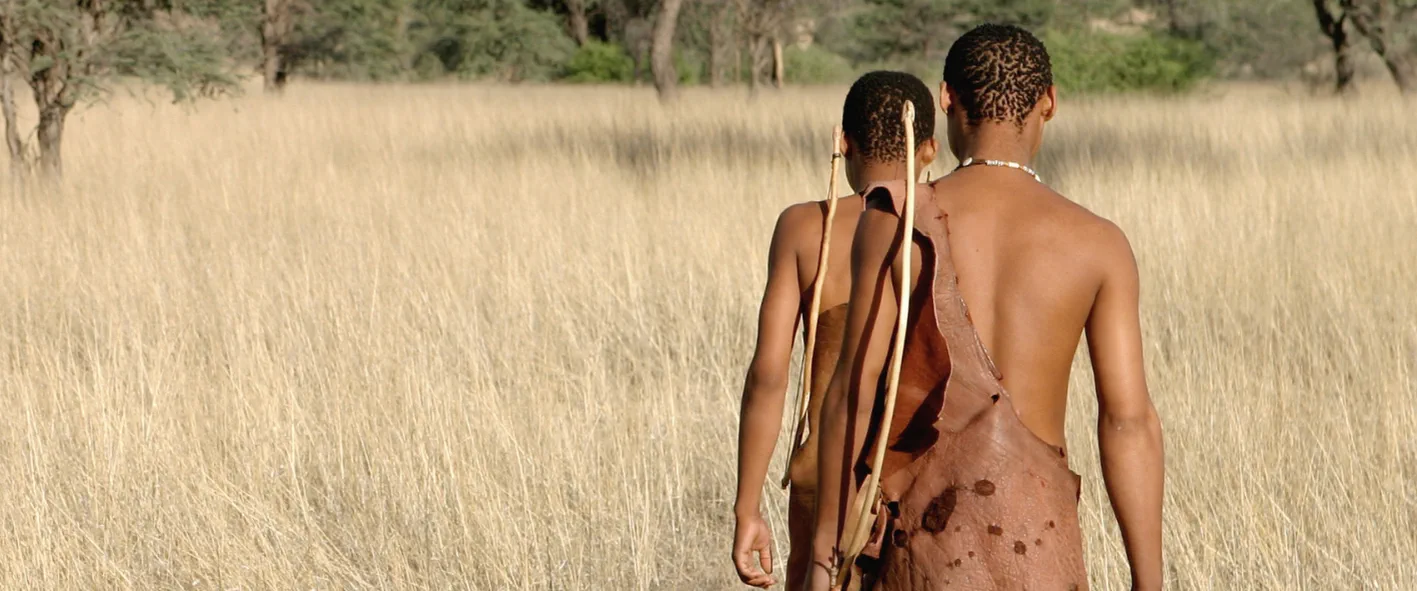
Further north into Kaokoland, where the semi-nomadic Himba people maintain a way of life that has adapted to modernity rather than yielded to it. A genuine community visit, arranged through a Himba coordinator, not a roadside encounter, includes an exchange with the village elder, observing the sacred fire ritual, and a chance to understand the Himba's elaborate kinship system. Epupa Falls on the Kunene River lies two hours further, a series of broad cascades where baobabs grow on the rocky banks and the water's mist creates a deep-green microclimate in an otherwise stripped-back landscape.
Two days in Etosha follow the logic of the waterholes: early-morning jeep drives to the Chudop and Klein Namutoni pans for dawn drinking sessions, midday rest at the lodge, late-afternoon drives back as the light turns gold on the pan's white surface. The illuminated Okaukuejo waterhole runs all night; a lion kill watched from the stone hide at 11pm is the kind of experience that follows you across several time zones.
Namibia's scale and solitude are its gifts, we design the itinerary, the private lodges and the specialist guides that help you understand what you're looking at.
Begin your journey